
Contacts & Companies
Your assistant keeps track of the people and companies you work with, so you never have to re-explain who's who.
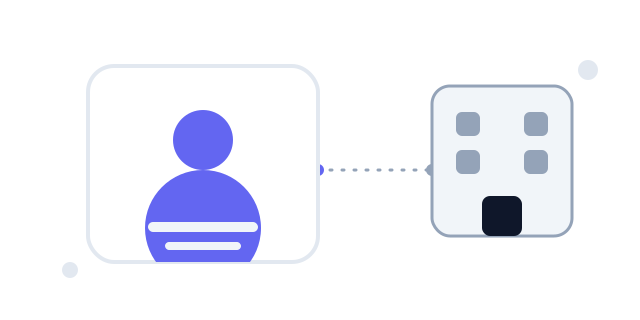
Your assistant naturally picks up on the people and businesses that come up in your work — who you email, who you meet with, who you're getting things done with. Think of it as a lightweight address book that fills itself in over time, instead of one you have to build by hand.
It builds itself as you go
You don't need to add anyone for your assistant to start keeping track of them. As you email back and forth, schedule meetings, or work on tasks together, your assistant notices who's involved and quietly keeps a note. The next time that person comes up, your assistant already knows who they are.
People and the companies they work at
Each person your assistant keeps track of can also be linked to the company they work for. That way, everything that's happened — every email, meeting, and task involving that person or their company — lives in one place. If you pull up a company, you can see everyone connected to it and the full history with them, all together, instead of scattered across old conversations.
Adding people yourself
You don't have to wait for your assistant to notice someone. Open Contacts in your sidebar (it has a Contacts tab and a Companies tab) and use the add button to create a person or a company yourself at any time. A contact can hold a name, preferred name, phones, emails, timezone, job title, company, website, social links, address, and more. To organize them your own way, give each one a priority (VIP, Standard, or Flexible) and add tags, then filter the list by tag or search by name. This is handy for someone you haven't emailed yet but know you'll be working with soon, like a new client or a vendor you're about to bring on.
Sharing with your team
Contacts can be shared with your team using the share toggle, and shared ones appear in a Team section of the list. Each contact is also marked Internal or External so you can tell coworkers from outside contacts. Shared contacts are available on plans that include team features.
If you've set up supervision rules that apply to a contact, their detail view shows how many, with a link to manage them.
Your assistant uses this automatically
Once your assistant knows about someone, it puts that knowledge to work without you having to spell things out. Say you're setting up a task and you mention "send this to Sarah from Acme" — your assistant already knows who Sarah is, what company she's with, and what your history together looks like. You don't have to re-introduce people every time you bring them up.
This works a lot like Memory: both are ways your assistant holds onto context so you don't have to repeat yourself. Memory remembers facts and preferences about you; contacts and companies remember who the people around you are.